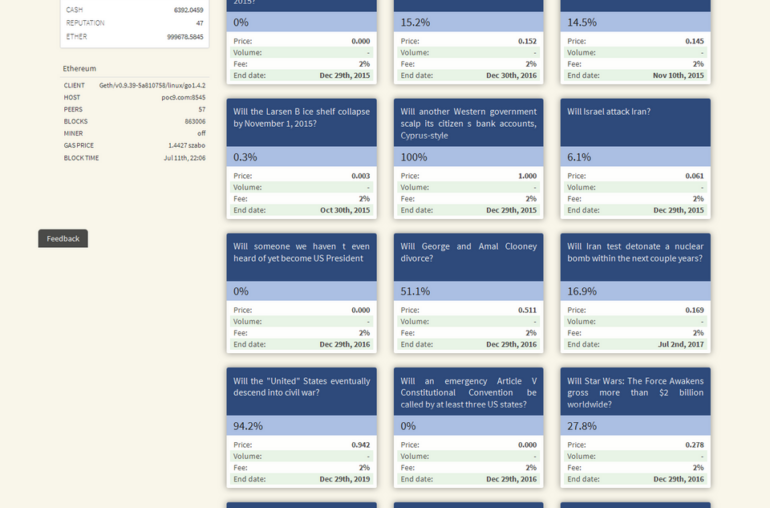
Event contracts are exploding in 2026, with top platforms generating over $37 billion in volume. These binary contracts, priced between $0 and $1, let traders bet on real-world events from Federal Reserve decisions to entertainment awards. Understanding how they work and which platforms to use is essential for anyone looking to profit from prediction markets.
- Contracts represent probability: $0.65 = 65% chance of event occurring
- Top platforms: Kalshi (regulated US) and Polymarket (blockchain-based)
- Trading strategies include market making and directional bets
How Event Contracts Work and Trading Basics
Event contracts priced 0-1 represent probability
Event contracts are binary financial instruments where prices between $0 and $1 directly represent the market’s probability assessment of an event occurring. According to the research data, a contract priced at $0.65 indicates a 65% chance of the event happening. This probability-based pricing system makes event contracts unique compared to traditional financial instruments.
The binary nature means contracts settle at either $1 (if the event occurs) or $0 (if it doesn’t), creating a simple win-or-lose outcome. Traders can buy contracts they believe will increase in value or sell contracts they expect to decrease, similar to betting on sports outcomes but with financial market mechanics.
Binary “Yes/No” contracts on real-world events
Binary contracts cover a wide range of real-world events including Federal Reserve decisions, inflation rates, political elections, and entertainment awards. The “Yes/No” format simplifies complex events into straightforward outcomes that traders can evaluate based on their knowledge and research.
These contracts allow traders to express opinions on specific outcomes without needing to own underlying assets. For example, rather than trading stocks affected by Federal Reserve decisions, traders can directly bet on whether the Fed will raise interest rates by a certain percentage.
Key trading concepts and terminology
Liquidity providers play a crucial role in event markets by continuously quoting both buy and sell prices, similar to traditional financial markets. These market makers ensure smooth trading by posting bid-ask spreads, which represent the difference between buying and selling prices.
Understanding spreads is essential for profitability since wider spreads mean higher transaction costs. Successful traders must also grasp concepts like position sizing, risk management, and timing entry and exit points based on market sentiment and new information.
Top Prediction Market Platforms and Their Features
Kalshi vs Polymarket: Leading platforms compared
| Feature | Kalshi | Polymarket |
|---|---|---|
| Regulation | CFTC-regulated in US | Blockchain-based (Polygon) |
| Market Focus | Economics, politics, weather | Politics, culture, global events |
| Volume | High in US markets | World’s largest platform |
| Payment | Traditional banking | Cryptocurrency |
Kalshi stands out as the best overall, regulated U.S. platform for event contracts, offering financial markets on outcomes like economics, politics, and weather. Polymarket operates as the world’s largest blockchain-based prediction market, favored for global, crypto-native trading on politics and culture.
Other major platforms and their specialties
Novig focuses on niche markets with specialized event contracts, while ProphetX targets professional traders with advanced analytics tools. Fanatics Markets and DraftKings Predictions leverage sports betting expertise to create engaging prediction experiences for casual users.
FanDuel Predicts emphasizes user-friendly interfaces for beginners, and Manifold Markets offers community-driven markets where users can create and trade their own event contracts. Each platform serves different trader preferences and experience levels.
Platform integration and trading tools
MetaMask integration allows users to trade directly on Polymarket using cryptocurrency wallets, streamlining the trading process for crypto-native users. Interactive Brokers provides access through their ForecastTrader platform, bringing prediction markets to traditional brokerage customers.
Dune Analytics helps track volume and market activity across platforms, while Market Integrity Hub offers strategy guides on determining which markets to trade, risk management, and position timing. These tools enhance the trading experience by providing data-driven insights.
Trading Strategies and Market Making on Prediction Markets
Market making strategies for liquidity provision
Market making on prediction markets involves providing liquidity by continuously quoting both buy and sell prices for event contracts. Market makers profit by capturing bid-ask spreads while managing inventory risk and adjusting quotes based on market conditions.
Successful market makers use automation to adjust prices in real-time as new information emerges. They must balance between maintaining competitive spreads and protecting against adverse price movements that could lead to losses.
Directional trading and position management
Directional trading involves taking positions based on anticipated market movements rather than providing liquidity. Traders analyze event probabilities, news developments, and market sentiment to identify mispriced contracts they believe will move in their favor.
Position management requires setting stop-loss levels, determining optimal position sizes, and knowing when to exit trades. Unlike market making, directional traders profit from price appreciation rather than spread capture, requiring different risk management approaches.
Risk management and when to close positions
Risk management is critical in prediction markets where binary outcomes create asymmetric risk-reward profiles. Traders should never risk more than they can afford to lose on any single contract and should diversify across multiple uncorrelated events.
Market Integrity Hub guides emphasize determining which markets to trade based on information advantage and closing positions when probabilities shift significantly. Successful traders develop systematic approaches to position sizing and exit strategies rather than relying on emotional decisions.
Prediction markets are rapidly evolving from niche platforms to mainstream investment tools, with explosive growth and increasing regulatory clarity. The key to success is starting with regulated platforms like Kalshi while understanding the probability-based pricing system. As traditional brokers integrate prediction markets and trading volumes continue to surge, traders who master these concepts early will be well-positioned to profit from this emerging asset class.
For comprehensive analysis of event contract strategies and platform comparisons, Predscanner.com offers detailed guides covering the latest market developments and trading techniques for 2026.