Event contract trading has exploded into a $37 billion market in 2026, offering traders a new way to profit from real-world outcomes ranging from economic data releases to sports results. This comprehensive guide breaks down exactly how prediction markets work, which platforms dominate the space, and what legal framework governs this emerging asset class.
- Prediction markets aggregate crowd wisdom through financial contracts tied to future events, with prices reflecting probability estimates
- Leading platforms include Kalshi (CFTC-regulated), Polymarket (blockchain-based), and major sports betting brands like DraftKings Predictions
- Legal status varies by jurisdiction, with federal CFTC approval creating nationwide access despite state-level challenges
What Event Contract Trading Is and How It Works in 2026
Prediction markets, sometimes called information markets or event futures, are markets where participants trade contracts whose payoffs are tied to future events. According to the AI Overview, these markets “yield prices that can be interpreted as market-aggregated forecasts,” essentially letting traders bet on the probability of real-world outcomes.
How Prediction Markets Aggregate Information Through Trading
Prediction markets work by letting traders back their beliefs with money, creating a financial incentive to find and share accurate information. When traders buy contracts, they’re essentially voting on the likelihood of an event occurring. The price of these contracts reflects the market’s collective wisdom about that probability.
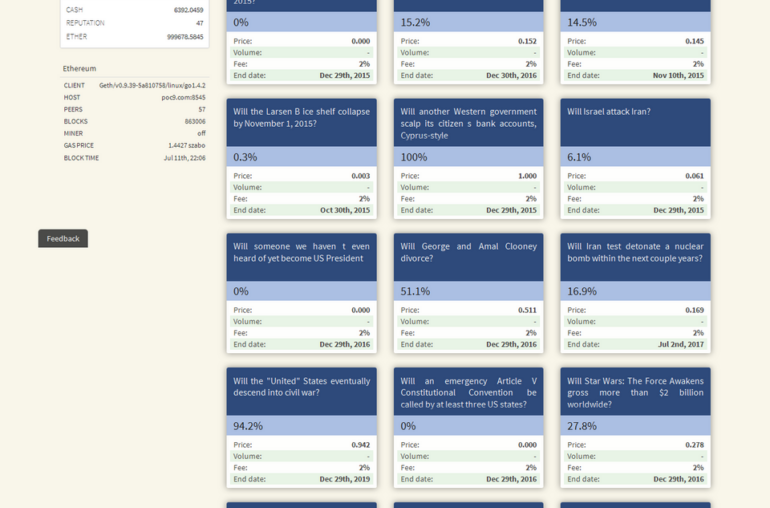
For example, if a contract for “Will the Fed cut rates next month?” trades at $0.75, the market is saying there’s a 75% chance of that happening. This price discovery mechanism aggregates information from thousands of traders, many of whom may have specialized knowledge about the topic.
Key Trading Mechanics: Buying Yes/No Contracts and Price Discovery
Trading event contracts follows a straightforward process. Users buy “Yes” or “No” contracts for specific events, with contract prices reflecting probability. A $0.75 price means a 75% chance of the event occurring, while $0.25 means a 25% chance.
The mechanics work like this: if you buy a “Yes” contract at $0.75 and the event happens, you receive $1.00 (a $0.25 profit). If the event doesn’t happen, you lose your $0.75 investment. This binary structure makes it easy to understand potential outcomes and calculate expected value.
Trading Strategies and Market Making in Prediction Markets
Modern prediction market traders increasingly use “Limit Orders” to set their own odds rather than just taking the listed price. This market-making approach allows traders to provide liquidity and potentially earn the spread between bid and ask prices.
Successful strategies often focus on markets you understand well, such as economics or sports, rather than speculating on unknown topics. Traders should also monitor positions closely, as prediction markets move very quickly when new information breaks. Always check local regulations to confirm which platforms are legally available in your state.
Top Prediction Market Platforms and Their Key Features for 2026
The prediction market landscape in 2026 features several major platforms, each with distinct advantages for different types of traders.
Kalshi: The CFTC-Regulated Leader for U.S. Traders
Kalshi stands as the largest and most established U.S.-regulated, CFTC-approved platform for trading event contracts. The platform offers markets on Fed interest rates, weather, politics, and more, with federal regulation allowing nationwide access even in states with strict gambling laws.
As a Designated Contract Market (DCM) approved by the Commodity Futures Trading Commission, Kalshi operates under federal derivatives law rather than state gaming laws. This regulatory status creates nationwide access and offers an alternative where traditional sports betting is limited. The platform makes money through small trading fees rather than traditional betting vigs.
Polymarket: The Global Blockchain-Based Market Leader
Polymarket operates as the world’s largest, blockchain-based, and decentralized platform, leading in global, high-volume, and fast-moving “culture markets.” The platform’s decentralized nature allows it to serve international traders and handle higher trading volumes than many regulated exchanges.
Polymarket’s blockchain infrastructure provides transparency and security while enabling faster settlement times. The platform has become particularly popular for political and cultural event contracts, where global interest drives significant trading volume.
Sports-Focused Platforms: DraftKings, Fanatics, and FanDuel
Major sports betting brands entered the prediction market space in December 2025, launching hybrid, sports-focused, and regulated trading platforms. DraftKings Predictions, Fanatics Markets, and FanDuel Predicts offer familiar interfaces to sports bettors while providing the information aggregation benefits of prediction markets.
These platforms combine traditional sports betting with event contract trading, allowing users to trade on game outcomes, player statistics, and other sports-related events. Their regulatory approval in many states gives them advantages over purely crypto-based alternatives.
Emerging Platforms and Alternative Models
Novig and ProphetX represent emerging platforms using a “no-vig” sweepstakes model designed to offer better, more competitive odds. These platforms target traders frustrated with traditional betting fees and seek to provide more favorable pricing structures.
Other specialized platforms include PredictIt (political focus), Manifold Markets (play-money/social), and Crypto.com, each serving specific niches within the broader prediction market ecosystem.
Legal Status and Regulatory Framework for Event Contract Trading
The legal landscape for prediction markets has evolved significantly, with federal CFTC approval creating new opportunities while state-level challenges persist.
CFTC Regulation and Federal Legal Status
Prediction markets are increasingly recognized as legitimate financial exchanges by the CFTC, which helps them circumvent state sports-betting laws in places like California and Texas. This federal recognition provides a regulatory framework that treats event contracts as financial derivatives rather than gambling.
Kalshi’s CFTC approval as a Designated Contract Market establishes a precedent for other platforms seeking federal regulation. This status allows operation across all 50 states, offering an alternative where traditional sports betting faces legal restrictions.
State-by-State Legal Variations and Restrictions
Despite federal approval, some states have challenged prediction market operators. Multiple states including Nevada, Michigan, Massachusetts, New York, Ohio, Arizona, Montana, and New Jersey have taken legal action or issued cease-and-desist orders against Kalshi, accusing it of operating unlicensed sports betting.
The core dispute centers on whether federal commodities law supersedes state gambling laws. While federal courts have often sided with Kalshi’s CFTC status, allowing continued operation in many places, the legal conflict creates uncertainty for traders in certain jurisdictions.
Tax Treatment and Financial Advantages
Contracts on regulated exchanges may be eligible for favorable Section 1256 tax treatment, which provides a 60/40 split between long-term and short-term capital gains rates. This tax advantage can significantly improve after-tax returns compared to traditional gambling winnings, which are typically taxed as ordinary income.
The regulatory framework also provides protections against market manipulation and insider trading, with rules adapted from traditional financial markets to curb illegal activities. Trades are fully funded upfront to reduce systemic risk, and platforms offer educational resources to help traders understand risks and common biases.
The event contract trading landscape in 2026 represents a convergence of regulatory approval, technological innovation, and mainstream adoption. With $37 billion in trading volume and CFTC backing for platforms like Kalshi, prediction markets have evolved from niche experiments to legitimate financial instruments. Traders should start with regulated platforms to ensure legal compliance while taking advantage of the information aggregation benefits these markets provide. As more traditional financial institutions and sports betting brands enter the space, the distinction between prediction markets and conventional trading will continue to blur, creating new opportunities for informed traders who understand both the mechanics and the regulatory framework.
predscanner.com offers detailed platform reviews and trading strategies for navigating this evolving market.
Frequently Asked Questions About Event Contract Guide Trading
What is prediction market trading?
Prediction Markets are markets where participants trade contracts whose payoffs are tied to future events, functioning as information markets or event futures that aggregate collective knowledge to forecast outcomes…
Is Kalshi legal in the US?
Yes, Kalshi is legal in most of the U.S. because it's regulated as a federal commodities exchange by the CFTC, allowing it to offer event contracts nationwide even in states with strict gambling laws…